
Understand Gogebic County Property Value
Michigan property records split values by purpose. The assessment feeds a mass tax system. State equalized value reflects equalization across units. Taxable value drives the actual tax calculation after caps and transfer rules apply. A sale price, by contrast, comes from a separate event and a separate source.
| Value Type | What It Means | Where It Is Recorded |
|---|---|---|
| Assessed value | Local assessment figure under Michigan rules | Local assessment roll and BS&A |
| State equalized value | Assessed value after equalization | Assessment notice and roll |
| Taxable value | Value used with tax rates after caps and uncapping rules | Tax and assessment record |
| Last sale price | Consideration from a past transfer, when shown | Recorded deed or transfer record |
The state constitution caps assessment at 50 percent of true cash value. That cap does not make an assessment a sale prediction. Dates, parcel changes, improvements, exemptions, and the transfer cycle can all pull the numbers apart.
Three Gogebic Assessment Numbers
Michigan's assessment notice model separates taxable value, assessed value, tentative equalization factor, and state equalized value. The notice also covers classification. It handles transfer and uncapping questions, plus Board of Review information. Compare figures only when they describe the same parcel and year.
Taxable value may stay capped by an inflation multiplier. A transfer generally uncaps it in the next calendar year, with some exceptions. A sharp jump can therefore reflect the ownership cycle, not a sudden market swing.
Gogebic Transfers Change Value Context
Michigan requires a buyer to file Property Transfer Affidavit Form 2766 with the city or township assessor within 45 days. The form captures the transfer date, local unit, price, PIN or legal description, and party details. Equalization then processes transfer documents from the Register of Deeds to maintain countywide data.
The deed date, the affidavit filing, and the next-year taxable-value change may sit in different records. Date each piece on its own. Resist forcing them into a single event.
Locate a Gogebic Property Value
Gogebic County BS&A Online supports Address, Name, and Parcel Number search modes, plus Current Tax and Delinquent Tax record families. The landing page does not state complete coverage dates. For an older missing year, check with the local assessor.
- Select the correct city or township and search the address.
- Save the full PIN, legal description, value labels, and year.
- Compare assessed, SEV, and taxable value without merging them.
- Check a recorded transfer separately when sale evidence is needed.
- Assessed value
- The local assessment before equalization.
- Market value
- An opinion of likely exchange value as of a date.
- Assessment ratio
- The relation between assessed and true cash value.
- Reassessment
- A new review of assessment data.
The official current-tax route was captured for its search context.
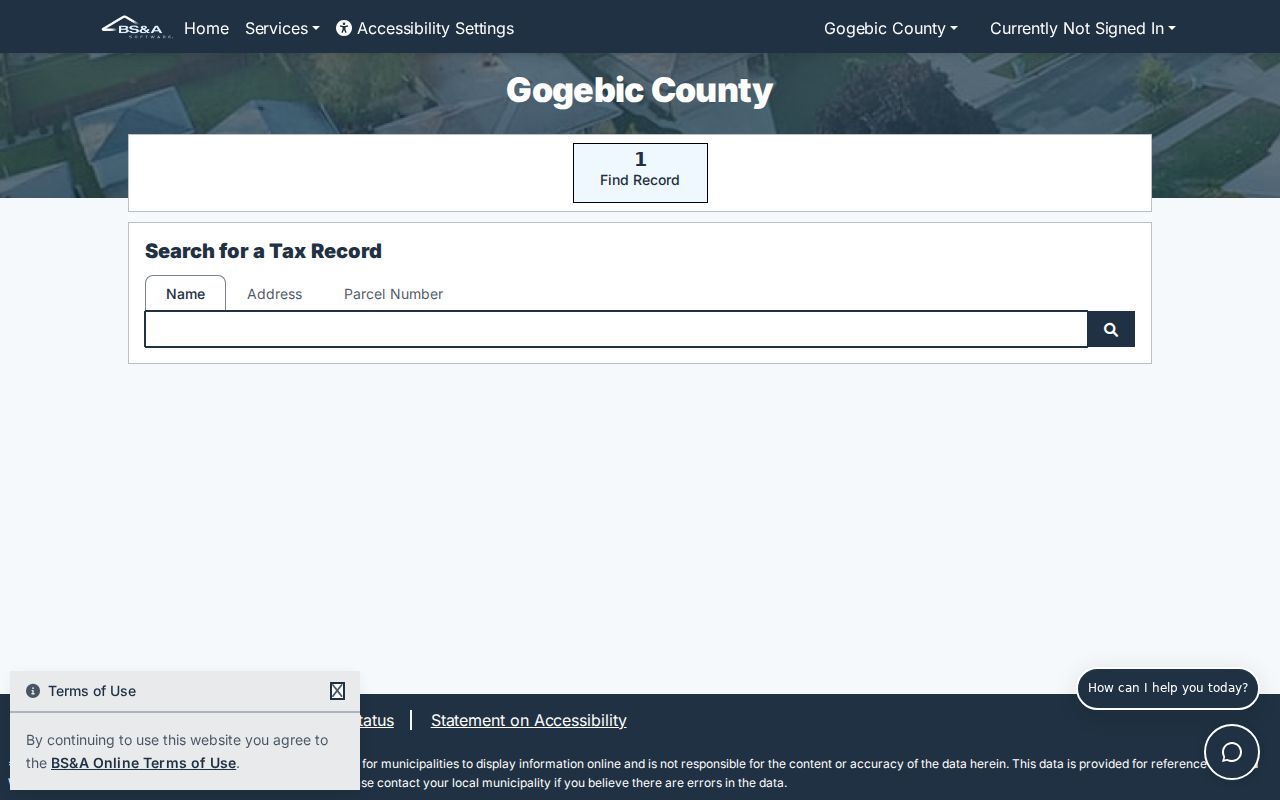
The portal shows the access route. Still, read each live record's labels and dates before quoting any value.
Gogebic Values Are Locally Assessed
The Gogebic County Equalization Office maintains countywide data and runs sales and appraisal studies, but local cities and townships do the assessing. Ironwood, Bessemer, and Wakefield each share a name with a township. Confirm the actual unit listed for the parcel.
If data is missing, call the local assessor first. Then ask Equalization about countywide transfer or GIS questions. A precise FOIA request can seek non-exempt records, metadata, or a transfer log.
Permits Explain Gogebic Value Changes
City permit records can add context for improvements, demolition, inspections, and occupancy approval. Ironwood, Bessemer, and Wakefield each publish their own office or form routes. There is no single county permit database. A permit's work scope or stated cost may help explain a later assessment change.
Permit evidence does not establish a market price. It does not prove ownership either. Match the address, PIN, date, and local unit before setting it beside the assessment.
Gogebic PRE and Taxable Value
Principal Residence Exemption status affects tax treatment. It can hint at owner occupancy. However, PRE is not title evidence. The County Treasurer audits PRE matters. State guidance allows review of the current year and prior years. Keep any exemption flag separate from the value analysis itself.
For the bill, turn to the Gogebic County property tax records resource. The same goes for the exemption claim. It also covers the appeal procedure. Valuation work ends with identifying and dating the figures.
Missing Gogebic Value Data
When an older value is missing online, contact the assessor for that local unit. Ask Equalization about countywide maintenance. The Treasurer can speak to tax status. Supply the PIN, legal description, requested years, and desired format. A missing year raises a coverage question. It is not proof that no assessment existed.
Gogebic Sale Price Evidence
A recorded consideration amount belongs to a single transfer. Weigh it against the deed date, legal description, and parcel condition at that time. It is not a countywide market index.
Gogebic Land Context Matters
Sunday Lake, river descriptions, mining-town lots, and city planning changes can all color a parcel's story. Public context may explain differences. It cannot produce a defensible numeric market value by itself.
Date Gogebic Value Comparisons
Always pair a value with its tax year or transfer date. Comparing an older sale to a newer assessment without dates hides the timing that explains the gap.
Limits of Gogebic Assessed Value
An assessed value serves the public tax system. It is not a parcel-specific market appraisal, a guaranteed sale price, or a substitute for walking the property. A recorded consideration amount is historical too, and it may reflect conditions a public field never reveals.
Value is not price. A Gogebic County assessed value does not say what the property would sell for and is not an appraisal.
A defensible value narrative labels every source and date. List the assessed value, the SEV, the taxable value, transfer evidence, and permit context. That approach beats turning one public number into an unsupported estimate.