
Read Gogebic County Property Tax Records
Gogebic County property tax records tie every Michigan parcel to its assessed value. They also cover taxable value, exemptions, charges, and payment history. You can search Gogebic County property tax records by address or by parcel number. Delinquency details sit there too. One thing trips people up, though. Local cities and townships, not the county, set the values. Collection splits between offices as well. So date each figure. Keep assessed and taxable value straight, and confirm any payoff or foreclosure status with the office that actually holds the account.
| Field | What It Shows | Where |
|---|---|---|
| Assessed value and SEV | Local and equalized values for the year | Local assessor and BS&A |
| Taxable value | Value used for tax calculation under Michigan caps | Assessment record |
| PRE status | Principal Residence Exemption treatment | Local assessor and Treasurer audit |
| Current tax | Levy, payments, and balance where shown | Local collector and BS&A |
| Delinquent tax | Returned balance and later collection stage | County Treasurer |
Michigan caps assessments at no more than 50 percent of true cash value. An inflation cap can hold taxable value down. After a transfer, that cap may lift. Some exceptions apply. None of these figures is a professional appraisal or a promised sale price.
Choose a Gogebic County Tax Search
The BS&A Gogebic portal offers three modes: All Record Search, Current Tax Search, and Delinquent Tax Search. The broad mode takes Address, Name, or Parcel Number. Advanced address search adds street and number-range fields. The portal uses reCAPTCHA and offers registration, yet basic public search works without an account.
| Search family | Use | Confirm with |
|---|---|---|
| All records | Find parcel and assessment context | Local assessor |
| Current tax | Review current bill or online history | Current collector |
| Delinquent tax | Locate a returned unpaid balance | County Treasurer |
Note: The portal labels its data as reference information, and missing years call for a coverage check with the office.
Gogebic County Local Assessors Set Values
County Equalization maintains the shared database, runs studies, equalizes property classes, and processes transfer documents. It does not perform local assessments or zoning. Each of the nine cities and townships employs its own assessor. Confirm the right unit before raising questions about classification, exemption, value, or review.
Postal names can mislead here. Ironwood City, Ironwood Township, and Erwin Township all share the 49938 area. Wakefield City and Wakefield Township share 49968. The local-unit field, the PIN, and the legal description are far better guides than the postal city.
Transfers Change Gogebic County Tax Values
Michigan requires a Property Transfer Affidavit, Form 2766, after a transfer. It must reach the city or township assessor within 45 days. The form asks for the address, county, transfer date, local unit, and price. It also asks for the PIN or legal description. The names of transferor and transferee go on it as well. A transfer generally uncaps taxable value in the next calendar year, subject to legal exceptions.
This sequence explains a common puzzle. The deed date can land in one year. The tax-roll owner label and the value jump can land in two others. Compare those dates before treating the gap as an error.
Note: The transfer affidavit updates assessment administration; the recorded deed documents the conveyance.
View Gogebic County Current Tax Access
The official current-tax route is the county's designated path for live tax searches. Use it as a starting point and confirm the actual bill, payment, and balance with the appropriate collector.
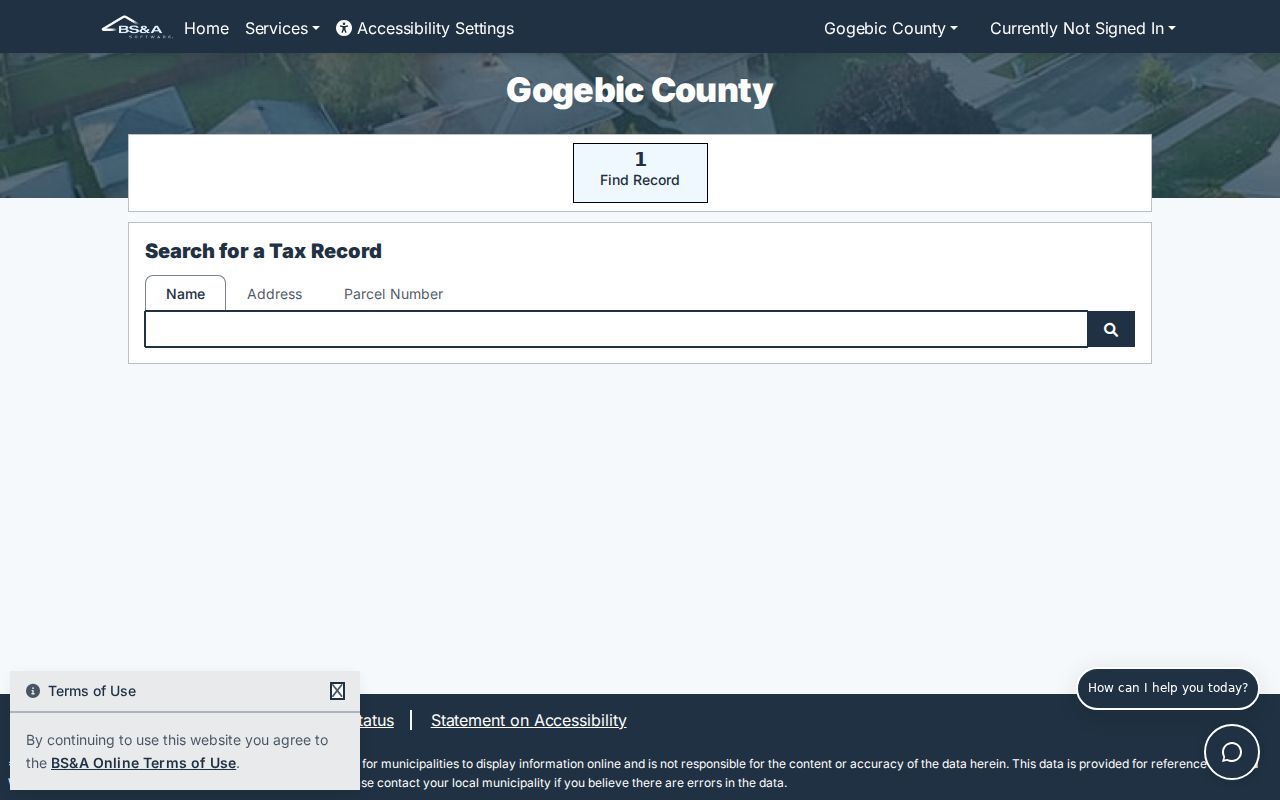
Online results age quickly. Confirm any live bill, payment, or balance with the collector before relying on it.
Look Up a Gogebic County Tax Bill
Start with the full parcel number. It cuts down address mix-ups and namesake errors. Then pick current or delinquent tax deliberately, save the search date and tax year, and contact the correct collector before paying or trusting a payoff figure.
- Find the parcel in BS&A and verify its local unit.
- Select the current or delinquent search for the proper year and stage.
- Compare assessed, SEV, taxable value, PRE, levy, payment, and balance fields shown.
- Confirm redemption or sale status with the Gogebic County Treasurer.
- Assessed value
- The local valuation measure under Michigan's ceiling.
- Taxable value
- The capped or uncapped figure used for tax.
- Mill or levy
- A rate applied by a taxing authority.
- Tax lien
- A legal claim tied to unpaid property tax.
Gogebic County Delinquency and Foreclosure
The Treasurer collects delinquent real-property tax and runs the forfeiture, foreclosure, and auction work. Michigan's clock starts when unpaid tax is returned delinquent on March 1. A 4 percent administration fee applies, plus 1 percent monthly interest. Forfeiture comes in the second year. Foreclosure follows in the third if the debt stays unpaid.
The county publishes no current parcel sale list or redemption total online. Check the Treasurer's official page and verify the live stage and amount directly.
Gogebic County Delinquent Tax Sources
The official delinquent-tax search gives the remote starting point for delinquent parcels. Pair anything it shows with a call to the Treasurer.
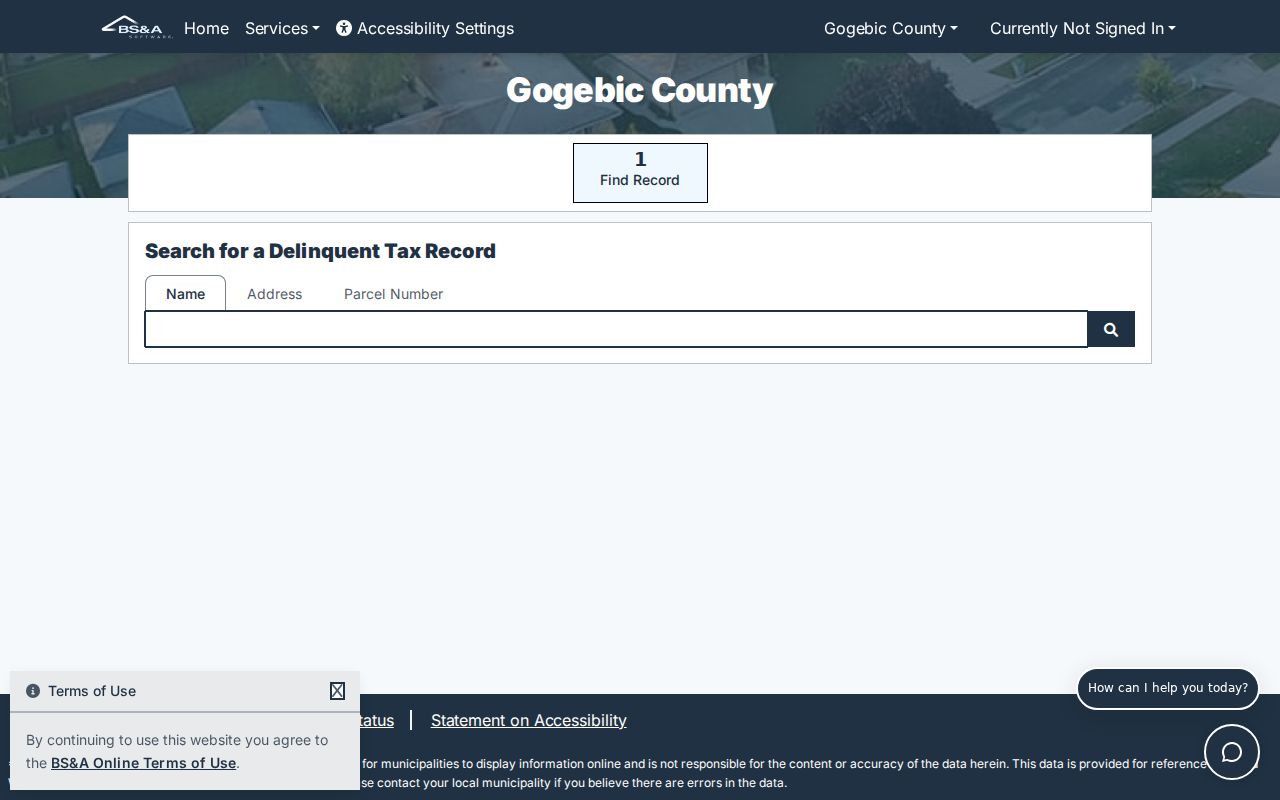
Balances, fees, and statutory stages shift over time. That online route needs a Treasurer confirmation before it settles anything.
The Gogebic County Treasurer page lists delinquency, foreclosure, PRE, auction, and owner-assistance functions.
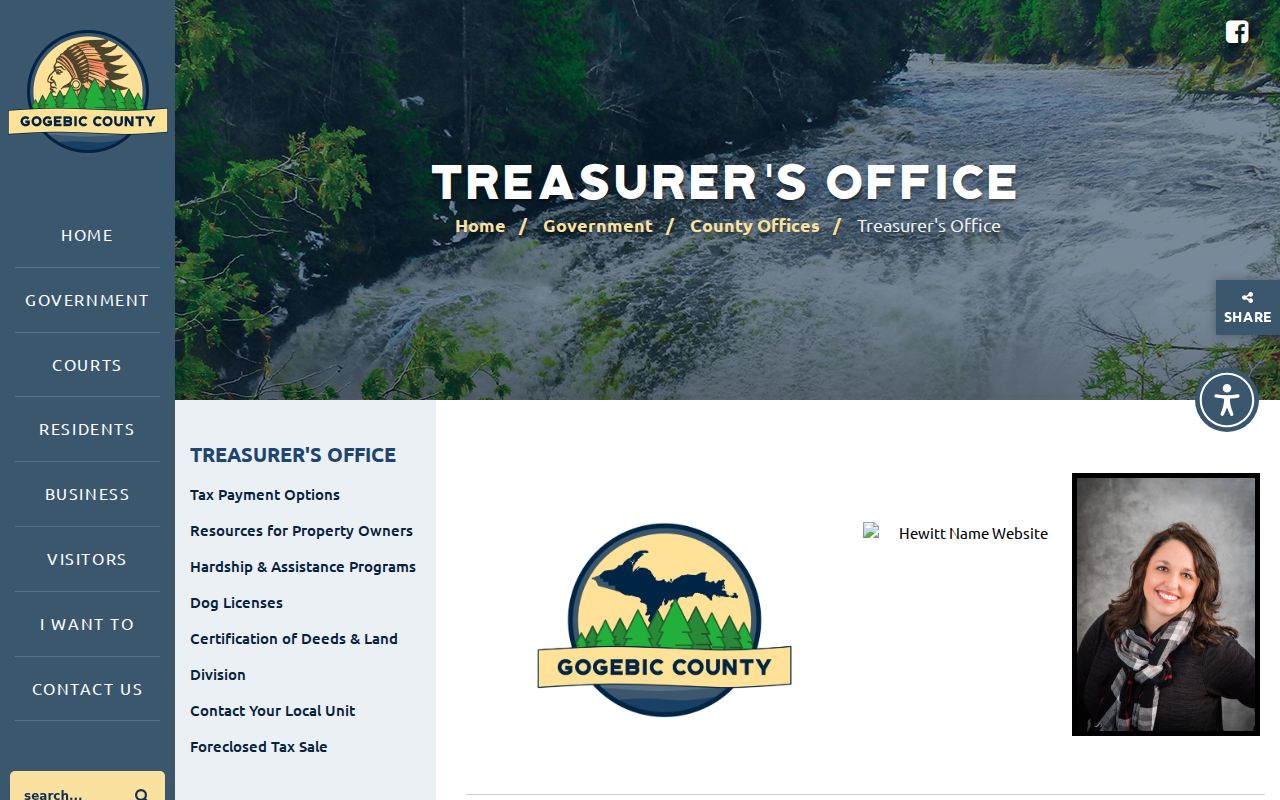
The office page shows which questions belong to the Treasurer, even though no parcel-level list appears online.
Gogebic County Land Bank Tax Leads
County notices from 2025 and 2026 mention a survey. A Phase I-II study comes up too. Land Bank News appears as well. These are leads worth chasing. They point toward distressed parcels, reuse potential, condition studies, and title cleanup. The county posts no dependable parcel list or completed scope for the effort.
Ask for the study, the map, the parcel list, title status, and disposition authority. A site named in a project is not necessarily county-owned. The land bank may not own it either.
Gogebic County PRE Records and Audits
The Principal Residence Exemption, or PRE, is a tax-status field rather than a deed. Gogebic County's Treasurer audits PRE claims. Michigan guidance allows review of the current year and the three preceding years. A denial can bring repayment plus interest. Use the status to understand the tax calculation. Do not use it to claim that a named person occupies the parcel today.
For an application, correction, or appeal, contact the assessor for the local unit. The local unit is listed on the parcel record. Ask which form, evidence, and deadline apply. Keep the assessor's decision, notice date, and any Treasurer audit correspondence with the tax-year record. If the owner or mailing fields differ from the deed, compare the transfer date and Form 2766 filing. Do that before assuming the exemption record is wrong.
Gogebic County Tax Records by Request
Older rolls and payment details sometimes sit outside the portal. Ask the local assessor, the collecting unit, or the Gogebic County Treasurer for the record you need. Include the year as well. Michigan FOIA, MCL 15.231 et seq., gives you the right to request non-exempt public records. Put the request in writing. A public body usually answers within five business days. It may also claim a ten-business-day extension. Charges for lawful search, review, separation, copying, and mailing can apply under the law. Be specific in the request. List the address, complete PIN, local unit, and tax year. Say whether you seek an assessment roll, tax bill, payment record, delinquency, foreclosure notice, PRE file, or Board of Review material. Electronic delivery can cut ambiguity and preserves the source date.
Challenge a Gogebic County Assessment
Start with the assessor for your city or township. Read the current notice closely. It lists classification, assessed value, the tentative equalization factor, SEV, taxable value, transfer treatment, and Board of Review instructions. Build a dated file with parcel facts, comparable assessment evidence, sale documents, permits, photos, and any error in the property characteristics. Filing dates vary across Gogebic County's local units. Confirm the meeting date, petition form, filing method, and eligibility rules with your local unit, along with the later Michigan Tax Tribunal route. Keep proof that you filed on time.
Appeal window. Gogebic assessment review follows each local unit's current Board of Review calendar. Obtain the live deadline and filing rules from that assessor.